- 09:24 Relaxing in bed / Tweeting with a cuppa tea / Caturday morning #haiku #
Saturday, February 28, 2009
Tweets for Today


Friday, February 27, 2009
Anathem by Neal Stephenson
 Anathem by Neal Stephenson
My review
rating: 4 of 5 starsThe society of the world of Arbre is strictly divided.
The mathematicians, scientists and philosophers live cloistered lives of quiet contemplation and study within the walls of monastic concents. Their contact with the saecular world outside the walls is strictly limited to the times of apert where the gates are opened for a brief interval every ten, one hundred and one thousand years. Fraa Erasmus, a young avout at the concent of Saunt Edhaar, suspects that his respected tutor Orolo has discovered something strange orbiting in the skies above Arbre. After Orolo is banished from the concent in the rite of Anathem, Erasmus must endeavour to find out exactly what his tutor had discovered and why it has made the saecular government so nervous.
This is a blockbuster of a novel, quite literally. It has a huge scope and discourses upon mathematics and philosophy in great detail, in much the same way as Stephenson's earlier novel 'Cryptonomicon' examined the science of cryptography. The mores and rituals of the mathic world of the concents are brought to life at a measured pace, and contrasted with the world outside, drawing obvious parallels with the tension between science and religion of our own world.
Some people have criticised the book for introducing a large number of new words for particular concepts or situations. I would say that the language makes sense in context, and is not difficult to follow. One good example is that noted philosophers from the past are honoured with the title of 'Saunt' which is a corruption of the word 'Savant', and is analogous to the way we would use the term 'Saint'. That wasn't too tricky, was it? Most chapters are preceded with a definition of a word, quoting from a mathic dictionary. There is a slightly patronising introductory note to anyone that has not read a science fiction novel of this sort before, but I suspect that this may have been included by a nervous sub-editor.
What may cause more trouble for the average reader are some of the passages dealing with some quite tricky concepts in the mathematics of parallel worlds, communication theory and geometry, but they are usually presented in the form of philosophical dialogues and should be reasonably easy to grasp if you pay attention. If the book has any faults, they are in the middle third which takes the form of an extended journey outside the walls of Saunt Edhaar and show that the saecular world is simply not as intriguing as the unique society of the mathic avout.
Highly recommended.
View all my reviews.
Tweets for Today
- 10:01 Problem resolved with / Process role security / Customer happy #
Wednesday, February 25, 2009
Tweets for Today
- 20:32 Stealing some rare bikes / Listening to ZZ Top / Damn! Liberty rocks! #
- 10:21 Is coming down with a cold - post swash crash. #
Monday, February 23, 2009
Tweets for Today
- 08:04 @lisybabe Is the volume muted in the flash player? #
- 08:05 Dog tired, bone weary / Bruised, battered yet unbowed / SWASH 09 was ace! #
Belated Sunday Links
- Spinal Tap Moments Rock music's most embarrassing cockups
- What's the greenest way to dispose of my dead body?
- How to turn a VCR into an incredibly dangerous toaster
- Tokyo By Night
- 24 Flash Mobs You Need to See to Believe
- ... every second an excellent way to visualise statistics
- Crisis of Credit Visualised
- Masterpieces of the Prado Hi res art in Google Earth
- The View from the Seven Highest Peaks on Earth
- Shocking! ArcAttack performs the Dr. Who Theme on Twin Tesla Coils
- SUMO Paint Online Image Editor
- 4 Minutes and 33 Seconds of Uniqueness Can you be the only person in the world to click on this game for 4 minutes and 33 seconds?
- Minutemen The arcade game. The whirring noise that you can hear is Alan Moore spinning in his grave.

The Elfish Gene: Dungeons, Dragons and Growing Up Strange by Mark Barrowcliffe
 The Elfish Gene: Dungeons, Dragons and Growing Up Strange by Mark Barrowcliffe
My review
rating: 4 of 5 stars
The late 70s was a particularly grim time. Economic crisis, terrorism, unemployment, an unpopular labour government - is this all starting to sound familiar? What more natural response than to turn your back on the whole mess and escape into the world of fantasy? That is exactly what author Mark Barrowcliffe did when he discovered Dungeons and Dragons, and threw himself headlong into for most of his teenaged years.
In much the same way as Andrew Collins mirrored my life of late 60s and early 70s suburbia in 'Where did it all go right?', Barrowcliffe seems to have had the same experiences as me in the world of D&D. Obsessive collections of books, fanzines and lead figures, trips to games shops to spend carefully hoarded pocket money, games sessions spent in pedantic arguments about whether characters can run faster than monsters or some other badly phrased rule, and even dressing up in silver spray painted, knitted chain mail to run around the local woods doing live action role playing.
This book is almost painfully funny in places, although it is the humour of recognising acute embarrassment at the extreme lack of any social skills displayed by the typical D&D fan. Worth reading if you have ever shaken a D20 in anger, or if you haven't and always wondered what the spoddy kids were doing in the corner with the lead figures and the funny shaped dice.
View all my reviews.
Swash 09
You've probably seen the various Twitters from me about Swash over the weekend, but I'll just ramble on a bit, more for my own record than anything else. I arrived at the Armouries, bright and early on Saturday morning, in plenty of time to register and find a place for my kit bag.
The first lecture session was an excellent introduction to the science of paleopathology by Kirsty McCarrison of the Durham chapter, in particular to the detective process involved in looking at bones and working out the sort of injuries that had been caused by weapons. Some lovely gruesome photos of bones displaying what must have horrific wounds, and some audience participation where we examined the pattern of injures on a 7th century skeleton and concluding that the poor unfortunate was probably part of a shield wall and unable to get out of the way of a descending axe cut to his shoulder and hip, before being finished off by a spear thrust to the chest. Lovely.
The next lecture was an analysis of various accounts of duels, both in fact and fiction, with the obligatory clips from the Duellists and the Princess Bride. It is well worth reading this account of a duel fought by the Italian Olympic fencing champion Aldo Nadi, which gives a good idea of the range of feelings experienced, both fear and anger.
After lunch, it was time for some action, so I joined the workshop for German Langes Messer (falchion) by Alex Kiermayer. A lovely, effective weapon with elements of sabre and backsword coming into play along with the typically Germanic methods of attack. From the long knife of the German middle ages, it was then time for the more visceral skills of the Bowie knife. Knife fights are up close and personal, lightning fast and full of dirty tricks. Excellent fun, and I was a particularly sweaty bunny by the end of the lesson.
After a much needed shower, and a well deserved cold beer, we headed back to the Armouries for the drinks reception and formal dinner. As a special treat, the museum interpreters had arranged a displayed of armoured foot combat in full plate. It was astonishing to see just how much mobility and speed that the combatants had whilst wearing 120 pounds of armour. Stunning to see.

The first lecture on Sunday morning dealt with the quirky German Dussack - a weapon that I knew very little about. Lots of slides of pictures of German chaps from the middle ages with enormous trousers. Fascinating and informative.
The next two workshop sessions were without doubt the absolute highlight of the weekend for me, covering the weapons and tactics for Naval boarding actions. The first session dealt with basic cutlass techniques and also the use of the tomahawk as a useful weapon for both disarming and eviscerating an opponent. After lunch we expanded on the cutlass and then brought in the use of the bayonet, pike and boarding axe, before finishing with the slung shot - a chunk of lead shot attached to a short piece of rope. Even using a balled up sock in place of the lead shot was enough to make my ears ring when caught round the side of the head at full extension. It would certainly have been very effective at laying an opponent out cold with very little trouble. What larks!
The final session of the day, and the weekend, was an introduction to Cunningham's techniques for walking stick and cane, where a casual stroll with a stick can instantly become a very aggressive and effective defensive stance. Hurrah!
What an excellent weekend, and I now have a fine collection of bruises to show for it!
The first lecture session was an excellent introduction to the science of paleopathology by Kirsty McCarrison of the Durham chapter, in particular to the detective process involved in looking at bones and working out the sort of injuries that had been caused by weapons. Some lovely gruesome photos of bones displaying what must have horrific wounds, and some audience participation where we examined the pattern of injures on a 7th century skeleton and concluding that the poor unfortunate was probably part of a shield wall and unable to get out of the way of a descending axe cut to his shoulder and hip, before being finished off by a spear thrust to the chest. Lovely.
The next lecture was an analysis of various accounts of duels, both in fact and fiction, with the obligatory clips from the Duellists and the Princess Bride. It is well worth reading this account of a duel fought by the Italian Olympic fencing champion Aldo Nadi, which gives a good idea of the range of feelings experienced, both fear and anger.
After lunch, it was time for some action, so I joined the workshop for German Langes Messer (falchion) by Alex Kiermayer. A lovely, effective weapon with elements of sabre and backsword coming into play along with the typically Germanic methods of attack. From the long knife of the German middle ages, it was then time for the more visceral skills of the Bowie knife. Knife fights are up close and personal, lightning fast and full of dirty tricks. Excellent fun, and I was a particularly sweaty bunny by the end of the lesson.
After a much needed shower, and a well deserved cold beer, we headed back to the Armouries for the drinks reception and formal dinner. As a special treat, the museum interpreters had arranged a displayed of armoured foot combat in full plate. It was astonishing to see just how much mobility and speed that the combatants had whilst wearing 120 pounds of armour. Stunning to see.
The first lecture on Sunday morning dealt with the quirky German Dussack - a weapon that I knew very little about. Lots of slides of pictures of German chaps from the middle ages with enormous trousers. Fascinating and informative.
The next two workshop sessions were without doubt the absolute highlight of the weekend for me, covering the weapons and tactics for Naval boarding actions. The first session dealt with basic cutlass techniques and also the use of the tomahawk as a useful weapon for both disarming and eviscerating an opponent. After lunch we expanded on the cutlass and then brought in the use of the bayonet, pike and boarding axe, before finishing with the slung shot - a chunk of lead shot attached to a short piece of rope. Even using a balled up sock in place of the lead shot was enough to make my ears ring when caught round the side of the head at full extension. It would certainly have been very effective at laying an opponent out cold with very little trouble. What larks!
The final session of the day, and the weekend, was an introduction to Cunningham's techniques for walking stick and cane, where a casual stroll with a stick can instantly become a very aggressive and effective defensive stance. Hurrah!
What an excellent weekend, and I now have a fine collection of bruises to show for it!
Sunday, February 22, 2009
Tweets for Today
- 12:57 Cutlass, tomahawk / Fighting a boarding action / With a hearty yaargh! #
- 16:06 Surprising to find / Nastiest pirate weapon / Lead shot in a sock #
- 16:11 A stout walking stick / Wielded with alacrity / My weapon of choice #
Saturday, February 21, 2009
Tweets for Today
- 07:10 Woke up convinced that the former DJ Bruno Brookes had died. Weird. #
- 07:10 Hi ho, hi ho, it's off to Swash we go! #
- 07:22 With rapier and dagger / Cutlass, cane and single stick / I set off for Leeds #
- 10:37 Sharp weapon trauma / Skeletal remains tell tales / Of ancient battles #
- 12:02 Meta analysis / Duels both fictional and true / Honour satisfied #
- 17:33 German falchion / Cut, step, thrust to face, disarm / Now that is a knife! #
- 17:36 From the Alamo / An utterly lethal knife / Bowie's legacy #
Friday, February 20, 2009
Wednesday, February 18, 2009
Tweets for Today
- 18:18 Time to saddle up / A new gang in Liberty / The Lost and the Damned #
- 13:28 @CollingsA Welcome to Twitter! #
Tuesday, February 17, 2009
No Fear by Tim Gill
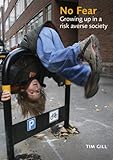 No Fear by Tim Gill
My review
rating: 4 of 5 stars
If you grew up the 1970s you probably remember coming home with scraped knees or similar injuries on more than one occasion. The usual response would be to have a bit of TCP antiseptic dabbed on and then get sent out again the next day. Things are a bit different now - kids are ferried to school in gas guzzling SUVs, play parks are fenced off and covered with safety matting and every aspect of children's lives and social relationships is a matter of concern and scrutiny. The world is a much more dangerous place, so we are told.
In this book Tim Gill argues that we have become a risk averse society to the detriment of our children's well being. To take the example of play, a well publicised campaign by the consumer television show "That's Life" in the 1980s led to the creation of exacting guidelines for children's play areas, with changes including the removal of particular items of equipment (remember "Witches Hats"?) and the introduction of safety matting in place of tarmac. A sensible idea, you might think. However, the cost of the matting can be up to 40% of the cost of the playground and is only effective in preventing death or serious injury in a tiny number of cases of falls from high equipment. Gill estimates that somewhere between £200 to £300 million has been spent to save perhaps one life. In the same period 1,300 children were killed and 40,000 seriously injured on the roads, so perhaps the money could have been better spent on traffic calming measures to improve road safety. Also, the provision of matting has led children to take greater risks leading to an increase in broken bones from falls.
It is also a fact that the number of children murdered by random strangers has remained constant (and also vanishingly rare) since the 1960s, and that children are 14 times more likely to be murdered or abused by a member of their family or somebody that they know. However, the majority of the effort in child protection is on 'Stranger Danger' and the focus in the media is on the danger from predatory paedophiles. Gill also points out that newspapers often report when children go missing, but rarely give the same attention to the majority of cases where they are safely returned home (except in the Shannon Matthews case where she was kidnapped by her own mother), leading to a false perception of the level of risk. It has also led to an obsession with criminal record checks that now label a third of the UK adult population as potential abusers, leading to yet further falls in the numbers of clubs and activities available to children through a lack of volunteers or the expense of paying for checks and bureaucracy.
Gill argues that we should allow our children to take risks, and that provision should be made for unstructured play and learning at schools, and looks at examples of adventure playgrounds which allow children to build and control their own play spaces. He says that we should not be so quick to interfere in children's lives by labelling every dispute and argument as bullying, but give them a bit more freedom to take control of their own lives as they grow into adulthood. Similarly, we should resist the polarisation of the characterisation of children as either little angels to be cosseted from all possible risk, or of thuggish hoodies to be feared.
This is a short book, but persuasive and well argued and it shares some themes with Ben Goldacre's book 'Bad Science' in the examination of the way the media falsely portrays risk and statistical evidence. It's well worth reading, particularly if you are a parent. The ebook is available as a free pdf from this site as well as a paper version.
Perhaps we should return to the old motto : Better drowned than duffers - if not duffers, won't drown ...
View all my reviews.
Monday, February 16, 2009
Tweets for Today
- 20:25 Back to Liberty / Call Little Jacob for guns / It's good to be home! #
Sunday, February 15, 2009
The Doll's House by Neil Gaiman
 The Doll's House by Neil Gaiman
My review
rating: 4 of 5 starsThis volume deals with the story of Rose Walker, a young girl who is destined to be a dream vortex - an attractor for bad dreams and nightmares, with potentially disastrous consequences if left unchecked. She moves into a house with a strange collection of people and then tries to track down her brother who is being held captive by some rather nasty step parents and has retreated into a dream world of his own. Meanwhile, the many and varied serial killers of America are drawing together for a convention in a motel somewhere in small town USA ...
As well as the main thread, there is an introductory chapter that adds to the mythology of Morpheus, the king of dreams, and an excellent standalone story of a man in the 13th century who makes a decision not to die. Morpheus is intrigued and agrees to meet the man once every hundred years to see if he regrets his choice.
Sandman is the very antithesis of the superhero genre. The stories deal with mythology and legend, and the character of Morpheus can often act in a cruel and peremptory manner, putting the order and responsibilities of his kingdom of dreams above any concern for the human realm. That said, the introductory story and the the story of the immortal man both reveal new sides to the Sandman's complex character.
Excellent stuff.
View all my reviews.

Sunday Links
- Comic Fonts and Lettering There's more to writing the word balloons than you might think.
- 'We're All Gonna Die - 100 meters of existence' A 100 meter long photo. Amazing.
- Is This the Motor Car of Tomorrow? Yes. Yes it is. Can I have mine now, please? (Moar)
- Sculpting the Impossible Solid Renditions of Visual Illusions
- How much is that Death Star in the window?
- Nano landscapes Now listen Dougal, these things are very small ...
- Japanese facades Varied Japanese architecture
- Foxes on a trampoline
- No Fear Growing up in a risk averse society - free e-book
- Siftables, the smart blocks DO WANT!
- Supercool Video Explains New F1 Rules F1 goes hybrid
- Shopping Cart Hero Excellent little game!
Saturday, February 14, 2009

Country of the Blind by Christopher Brookmyre
 Country of the Blind by Christopher Brookmyre
My review
rating: 3 of 5 starsIt should be an open and shut case.
Four men have been caught, literally red handed, running from a plush country house in Scotland where the wealthy and influential media baron (and major donor to the Conservative party) Roland Voss has been brutally murdered, along with his wife and two security guards. The four have previous form for burgling similar country houses, so is this just a case of a robbery gone badly wrong or something more sinister? Well, if Jack Parlabane is involved, what do you think?
This was a bit of an odd book, on the whole. I enjoyed it, but I found the author's obsession with Tory sleaze from the early nineties a bit tiresome. Even though I agreed with all of the points he was making, it felt very dated in places. There's quite a long section in the middle of the book with the accused men on the run that loses focus on the fairly convoluted conspiracy that is behind the whole story, and there is less of Parlabane in this book than in the previous one in the sequence.
It's a good read, but I think I would have enjoyed it more if I had read it ten years ago when it first came out.
View all my reviews.
Friday, February 13, 2009
Tweets for Today
- 20:12 @mitchbenn When do we get to drink the kool aid? :-) #
- 10:48 @Herring1967 Congratulations on your golden jubilee podcast! #
- 17:55 Ow. Just fallen over on the ice. #
Tweets for Today
- 07:19 An entangled bank / Diversity and grandeur / Happy Darwin day! #
- 20:12 @mitchbenn When do we get to drink the kool aid? :-) #
Thursday, February 12, 2009
Bad Science - Ben Goldacre
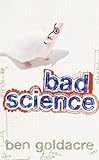 Bad Science by Ben Goldacre
My review
rating: 5 of 5 stars
In the last hundred years or so, evidence based medicine has probably done more to improve life expectancy and general quality of life for people than anything else. Measuring the outcomes of treatments, drugs and surgical techniques in carefully designed and controlled trials allows us to choose those that work and discard those that don't, or are harmful. To coin a phrase, it's not rocket science, but in this book Dr Ben Goldacre shows how simple common sense is being drowned by a tidal wave of nonsense perpetrated by homeopaths, tv nutritionists, big pharmaceutical companies and most egregiously of all by journalists and the media who prefer outrageous scare stories and outright lies to honest reporting.
The book opens with an amusing disection of a device that supposedly de-toxes your body with a sort of foot bath and provides a gentle introduction to ways of testing the efficacy of such products for yourself. Another good example is to try burning an ear candle without sticking it in your ear and you will easily see that it produces the exact same waxy residue as when it is supposedly extracting ear wax.
The book then goes on to examine homeopathy, including a complaint from a homeopathist who claimed that a newpaper column by Goldacre had made them look stupid by not mentioning that homeopathy relies on banging the jar of diluted water ten times on a special leather and horsehair pad to get the molecules to 'remember' whatever it is they are supposed to remember. However, the point is not to mock (much) but rather to look at the much more interesting placebo effect where genuine medical benefits can be seen and measured. He similarly skewers the pseudo science of nutritionists who affect medical expertise by wearing a white coat and standing in front of some test tubes, and recommend fad diets and expensive supplements (that they can sell you for a tidy profit) rather than the sensible option of eating a balanced diet and moderate exercise.
The final section deals with the MMR hoax where a perfect storm of a badly designed medical study, parents of autistic children looking for someone to blame (and sue) and outrageously biased and untrue media reporting combined to cause a catastrophic fall in the number of children being vaccinated against potentially harmful diseases.
This is an excellent book that explains how to interpret evidence and statistics, and look behind the scary headlines where everything either causes cancer or cures it.
Highly recommended!
View all my reviews.
Darwin Day Links
- Darwin Day Celebration
- Dawkins on Darwin Nuff said
- At home with Darwin... 200 years on A tour around Down House
- The Devil in Dover Dogma v. Darwin in Small-town America. Author Lauri Lebo talks about the way the school board in the town of Dover lied outrageously in an attempt to shoe horn creationism into the curriculum.
- Darwin's Galapagos
- Creatures of the Galapagos A photo slideshow
- The Man In Darwin's Shadow Did Alfred Russel Wallace think up evolution first?
- The Evolution of Life in 60 Seconds Putting the timeline into perspective
- Origin of species Read the entire first edition, on-line
- Blogging the Origin I've linked to this before, but this really is an excellent resource for explaining some of the thinking and biology behind The Origin of Species
Wednesday, February 11, 2009
Ju-Jitsu for the weaker sex
Excellent advice from the 1930s for dealing with objectionable people ...
Tweets for Today
- 13:17 @treefroggirl Is everything OK Nichole? #
Tuesday, February 10, 2009
Tweets for Today
- 09:21 Frozen reservoirs / Shrouded in mist, as snow melts / Meeting in Salford #
- 11:34 Weekly virus scan / Runs for just shy of three hours / Fecking Microsoft #
Monday, February 09, 2009
Tweets for Today
- 10:04 Just about to brave the Woodhead Pass - no reports of any problems, but the view should be spectacular at the top! #
Sunday, February 08, 2009
Sunday links
- This is your teacher on acid A true account of what happened when a student slipped LSD into his teacher's coffee
- Left for Dead Valentines Roses are red, zombies are green ...
- We Rock Otway at his very best
- Free music! A huge catalogue of free music
- Ziggy Stardust remixed One of the better mash up projects
- There's probably no teapot ...
- The Empire That Was Russia Rare colour photographs of Russia before the revolution
- Make Love Not Porn From a TED talk - the difference between porn and real life
- Routes A true viral game
- Vector 3 A classic mini boardgame now available for free
- Perfect Balance
Saturday, February 07, 2009
Tweets for Today
- 07:19 @MitchBenn Welcome to Twitter! Don't go getting stuck in any lifts - it's not compulsory ... #
- 08:50 Woodpecker's rattle / Adds a new timbre to the / Woodland dawn chorus #
- 12:22 Ow. My hands are sore again. Think I might need to go to the doctors ... :-( #
- 12:22 @MitchBenn You may be some time ... #
- 17:19 Paths shovelled, car cleaned / Clothes ironed, dog walked, all jobs done / Time for Fallout 3! #
Origin of Species by Charles Darwin
 Origin Of Species by Charles Darwin
My review
rating: 5 of 5 stars
Evolution by natural selection seems such a simple, logical and common sense idea, I'd never actually got around to reading the book that first proposed the idea until now. I'm certainly glad that I made the effort - even though some parts are hard going for somebody who is not a biologist or naturalist, most of the book is a meticulous and well written examination of a simple thesis, accessible to everyone. It's a very good example of popular science writing.
It opens with the observation that domesticated animals, using pigeons as a prime example, can be bred to enhance or eliminate certain physical characteristics or behavioural traits. An experienced breeder will note subtle differences from one generation to the next and select particular birds to produce the end result that he is looking for. Darwin's revelation was to realise that the same process occurs naturally, with populations controlled by limited resources, geography or other factors, and those creatures with characteristics best suited in the struggle for existence would be the ones to pass on their traits to their off spring.
Darwin spends many chapters looking for possible flaws and objections to his thesis, and answers just about every objection that modern creationists still like to cite. The scarcity of transitional forms, the gaps in the fossil records and the complexity of structures like the eye are all addressed in great detail, backed up by painstaking research carried out over many years. Darwin even went so far as putting seeds into the gullets of dead birds, floating them in water for several months and then germinating them to show how plants could spread to geographically isolated islands - one can only wonder at the reaction of his wife to finding bird corpses floating in tanks of water! He also followed ants around the English countryside to examine their various behaviours, picked up bird excrement, and most famously went on an arduous voyage on The Beagle to collect specimens and examine geology. The book also contains many examples of correspondences with naturalists from around the world providing evidence to back up his theory.
Looking at the 'Origin' now, with the benefit of 150 years of hind sight reveals a few gaps in Darwin's knowledge. He knew nothing of continental drift, for example, which would have explained how certain populations of animals diverged at some points in the distant past. He also had no idea of the existence of DNA, which has now provided the most compelling and direct proof for the links between the various branches of the tree of life. The fossil record is also now much more comprehensive and better dated than in Darwin's day.
I can do no better as an example of his writing style than to quote the concluding paragraph of the book:
It is interesting to contemplate an entangled bank, clothed with many plants of many kinds, with birds singing on the bushes, with various insects flitting about, and with worms crawling through the damp earth, and to reflect that these elaborately constructed forms, so different from each other, and dependent on each other in so complex a manner, have all been produced by laws acting around us. These laws, taken in the largest sense, being Growth with Reproduction; Inheritance which is almost implied by reproduction; Variability from the indirect and direct action of the external conditions of life, and from use and disuse; a Ratio of Increase so high as to lead to a Struggle for Life, and as a consequence to Natural Selection, entailing Divergence of Character and the Extinction of less-improved forms. Thus, from the war of nature, from famine and death, the most exalted object which we are capable of conceiving, namely, the production of the higher animals, directly follows. There is grandeur in this view of life, with its several powers, having been originally breathed into a few forms or into one; and that, whilst this planet has gone cycling on according to the fixed law of gravity, from so simple a beginning endless forms most beautiful and most wonderful have been, and are being, evolved.
View all my reviews.
On a cold and frosty morning

Foxfield woods, pre-dawn

The sun poking up on a freezing cold morning

Back in the warm with a vanilla latte!
Caturday

Doris prepares to pounce. This is the cat that jumped up onto the kitchen worktop last night and clawed her way into a shrink wrapped chicken and bacon pizza and ate a sizeable chunk before being caught.
Friday, February 06, 2009
Tweets for Today
- 08:42 listening to the Collings and Herring podcast at my desk and trying not to laugh too much ... :-) #
Thursday, February 05, 2009
Tweets for Today
- 13:05 Special lunch time treat / Strawberry white choc muffin / Nom nom nom nom nom #
Tuesday, February 03, 2009

Snowmageddon
Well, they say to be careful what you wish for ...
From a few flurries on Sunday afternoon, the snow soon built up into a steady down fall of big, floaty flakes leaving a large swath of fresh, crisp powder by the time I poked my nose out of the door at six o'clock on Monday morning. It was a magical morning walk, with satisfying crunching noises underfoot and an excited dog bounding through drifts deeper than his, admittedly rather stubbular, legs.
I didn't bother with the drive into Leeds, and just hooked up an extra 19" monitor to my laptop which along with the study pc gave me three screens on my desk for a nicely panoramic working space. I emailed my boss and then settled down with a nice vanilla latte with the snow falling outside whilst I worked. Lovely.
This morning was bright and clear, and apart from a bit of ice on the road, the drive in was as easy as a pastry based confection containing either fruit or meat. I was at my desk for half past eight, to find an email warning that the car park was a bit icy - slightly redundant after I had parked and then skated my way to the door carrying my laptop bag. One benefit (or drawback, depending how you look at it) was that the fridge was half full of sample pots of Gu (and there should be an umlaut on there) chocolate mousse. Nom nom nom.
In games news, the Operation Anchorage DLC for Fallout 3 proved to be a nice little addition to the game, giving another couple of hours of fairly linear shoot-em-up action, being somewhat reminiscent of the stealth ninja black ops bits of the original Half Life with a wintery feel. Slightly odd to be looking for health and ammo recharging stations rather than looting bodies though. Back to the wastelands again, and probably time to tackle some main story missions now.
In DVD news, we watched the Danny Boyle film 'Sunshine'. From the trailers I had been expecting a fairly cerebral bit of SF in the vein of Solaris or 2001, but it turned out to be an totally incoherent piece of tosh with a complete disregard for the laws of physics (Jim) and logic. Nice use of surround sound and some impressive visuals, but otherwise utter rubbish. Avoid.
Much more interesting was 'Being Human' where the concept of a vampire, a werewolf and a ghost sharing a house sounds like the setup for a joke, but was actually pretty good apart from some bending of the genre rules. The vampire chap seems to have no problems with sunlight that aren't cured by wearing sunglasses and it wasn't really clear whether the ghost girl could leave the house or not, or who could see her exactly, and how solid she actually is. Good fun, if a bit histrionic and overblown in places. Much better than 'Demons' at any rate.
Also well worth watching was the David Attenborough documentary about Charles Darwin and the tree of life. This really should be compulsory viewing for the reported 50% of people for whom the majestic diversity of nature is insufficient and want to believe either that the universe was poofed into existence six thousand years ago on a particularly dull Tuesday afternoon, or that god or various gods have somehow used a spectacularly long winded and cruel process of evolution involving three billion years of death and at least six mass extinctions to evolve humans who have trouble walking upright without developing back ache. As Attenborough himself says, if you believe in a creator, then you believe in the sort of god that creates worms that are perfectly designed to grow in the eyeballs of African children. Lovely.
From a few flurries on Sunday afternoon, the snow soon built up into a steady down fall of big, floaty flakes leaving a large swath of fresh, crisp powder by the time I poked my nose out of the door at six o'clock on Monday morning. It was a magical morning walk, with satisfying crunching noises underfoot and an excited dog bounding through drifts deeper than his, admittedly rather stubbular, legs.
I didn't bother with the drive into Leeds, and just hooked up an extra 19" monitor to my laptop which along with the study pc gave me three screens on my desk for a nicely panoramic working space. I emailed my boss and then settled down with a nice vanilla latte with the snow falling outside whilst I worked. Lovely.
This morning was bright and clear, and apart from a bit of ice on the road, the drive in was as easy as a pastry based confection containing either fruit or meat. I was at my desk for half past eight, to find an email warning that the car park was a bit icy - slightly redundant after I had parked and then skated my way to the door carrying my laptop bag. One benefit (or drawback, depending how you look at it) was that the fridge was half full of sample pots of Gu (and there should be an umlaut on there) chocolate mousse. Nom nom nom.
In games news, the Operation Anchorage DLC for Fallout 3 proved to be a nice little addition to the game, giving another couple of hours of fairly linear shoot-em-up action, being somewhat reminiscent of the stealth ninja black ops bits of the original Half Life with a wintery feel. Slightly odd to be looking for health and ammo recharging stations rather than looting bodies though. Back to the wastelands again, and probably time to tackle some main story missions now.
In DVD news, we watched the Danny Boyle film 'Sunshine'. From the trailers I had been expecting a fairly cerebral bit of SF in the vein of Solaris or 2001, but it turned out to be an totally incoherent piece of tosh with a complete disregard for the laws of physics (Jim) and logic. Nice use of surround sound and some impressive visuals, but otherwise utter rubbish. Avoid.
Much more interesting was 'Being Human' where the concept of a vampire, a werewolf and a ghost sharing a house sounds like the setup for a joke, but was actually pretty good apart from some bending of the genre rules. The vampire chap seems to have no problems with sunlight that aren't cured by wearing sunglasses and it wasn't really clear whether the ghost girl could leave the house or not, or who could see her exactly, and how solid she actually is. Good fun, if a bit histrionic and overblown in places. Much better than 'Demons' at any rate.
Also well worth watching was the David Attenborough documentary about Charles Darwin and the tree of life. This really should be compulsory viewing for the reported 50% of people for whom the majestic diversity of nature is insufficient and want to believe either that the universe was poofed into existence six thousand years ago on a particularly dull Tuesday afternoon, or that god or various gods have somehow used a spectacularly long winded and cruel process of evolution involving three billion years of death and at least six mass extinctions to evolve humans who have trouble walking upright without developing back ache. As Attenborough himself says, if you believe in a creator, then you believe in the sort of god that creates worms that are perfectly designed to grow in the eyeballs of African children. Lovely.
Tweets for Today
- 07:28 going to Leeds in the car - I may be some time ... #
- 09:11 Glorious sunrise / Snow tinged with a rosy glow / Satisfying crunch #
Monday, February 02, 2009
Tweets for Today
- 06:50 Early morning walk / Stepping through the wardrobe / Narnia awaits! #
- 09:16 @nadiajane Yikes! Hope you are ok? #
- 17:46 Snowman constructed / Dog eyes it curiously / Then cocks his right leg #
Sunday, February 01, 2009
Sunday Links
- Top 5 Most Extreme Exoplanets
- The Universal Record Database Youtube crossed with Guinness Book of Records
- Armoured animals
- Zoom in on a 1,474-Megapixel photo of the inauguration
- George Harrison Sings!
- Pete n Dud sing!
- All of a twitter Uncle tweets!
- Audio Voyeurism Private recordings that people have accidentally shared on Napster
- Voice draw
- Cursive buildings A strange but effective technique for giving old photos a 3d effect.
- Champion of Guitars Guitar Hero - the text adventure!
- Pac-Man Dungeons Pacman - the text adventure!
Subscribe to:
Posts (Atom)