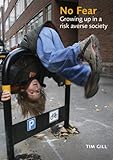
 No Fear by Tim Gill
My review
rating: 4 of 5 stars
If you grew up the 1970s you probably remember coming home with scraped knees or similar injuries on more than one occasion. The usual response would be to have a bit of TCP antiseptic dabbed on and then get sent out again the next day. Things are a bit different now - kids are ferried to school in gas guzzling SUVs, play parks are fenced off and covered with safety matting and every aspect of children's lives and social relationships is a matter of concern and scrutiny. The world is a much more dangerous place, so we are told.
In this book Tim Gill argues that we have become a risk averse society to the detriment of our children's well being. To take the example of play, a well publicised campaign by the consumer television show "That's Life" in the 1980s led to the creation of exacting guidelines for children's play areas, with changes including the removal of particular items of equipment (remember "Witches Hats"?) and the introduction of safety matting in place of tarmac. A sensible idea, you might think. However, the cost of the matting can be up to 40% of the cost of the playground and is only effective in preventing death or serious injury in a tiny number of cases of falls from high equipment. Gill estimates that somewhere between £200 to £300 million has been spent to save perhaps one life. In the same period 1,300 children were killed and 40,000 seriously injured on the roads, so perhaps the money could have been better spent on traffic calming measures to improve road safety. Also, the provision of matting has led children to take greater risks leading to an increase in broken bones from falls.
It is also a fact that the number of children murdered by random strangers has remained constant (and also vanishingly rare) since the 1960s, and that children are 14 times more likely to be murdered or abused by a member of their family or somebody that they know. However, the majority of the effort in child protection is on 'Stranger Danger' and the focus in the media is on the danger from predatory paedophiles. Gill also points out that newspapers often report when children go missing, but rarely give the same attention to the majority of cases where they are safely returned home (except in the Shannon Matthews case where she was kidnapped by her own mother), leading to a false perception of the level of risk. It has also led to an obsession with criminal record checks that now label a third of the UK adult population as potential abusers, leading to yet further falls in the numbers of clubs and activities available to children through a lack of volunteers or the expense of paying for checks and bureaucracy.
Gill argues that we should allow our children to take risks, and that provision should be made for unstructured play and learning at schools, and looks at examples of adventure playgrounds which allow children to build and control their own play spaces. He says that we should not be so quick to interfere in children's lives by labelling every dispute and argument as bullying, but give them a bit more freedom to take control of their own lives as they grow into adulthood. Similarly, we should resist the polarisation of the characterisation of children as either little angels to be cosseted from all possible risk, or of thuggish hoodies to be feared.
This is a short book, but persuasive and well argued and it shares some themes with Ben Goldacre's book 'Bad Science' in the examination of the way the media falsely portrays risk and statistical evidence. It's well worth reading, particularly if you are a parent. The ebook is available as a free pdf from this site as well as a paper version.
Perhaps we should return to the old motto : Better drowned than duffers - if not duffers, won't drown ...
View all my reviews.

No comments:
Post a Comment